How to source waste tire recycling equipment from China?
Struggling to find a reliable Chinese supplier? You worry about quality, service, and hidden costs. A big investment feels like a gamble when you’re navigating an unfamiliar market.
To source equipment from China, focus on suppliers with proven global projects and transparent after-sales service. Verify their manufacturing capabilities, ask for client references, and clearly define your technical requirements—especially for wear parts and dust control—before signing any contract.
This sounds simple, but there is a lot to unpack. I’ve spent years in this industry, helping clients like you navigate this exact process. Sourcing from China can be incredibly rewarding if you know what to look for and what questions to ask. Let me share what I’ve learned to help you make a smart investment and avoid the common pitfalls many buyers face. It’s about finding a partner, not just a machine.
Who is the biggest tire recycling company?
You want to work with the best, but focusing on "biggest" can be misleading. A massive company might not give your project the attention it deserves. You need a reliable partner.
There is no single "biggest" global tire recycling company, as the market includes both operators and equipment manufacturers. Instead of size, focus on which company’s technology, scale, and support best fit your specific project needs, like capacity and end-product quality.
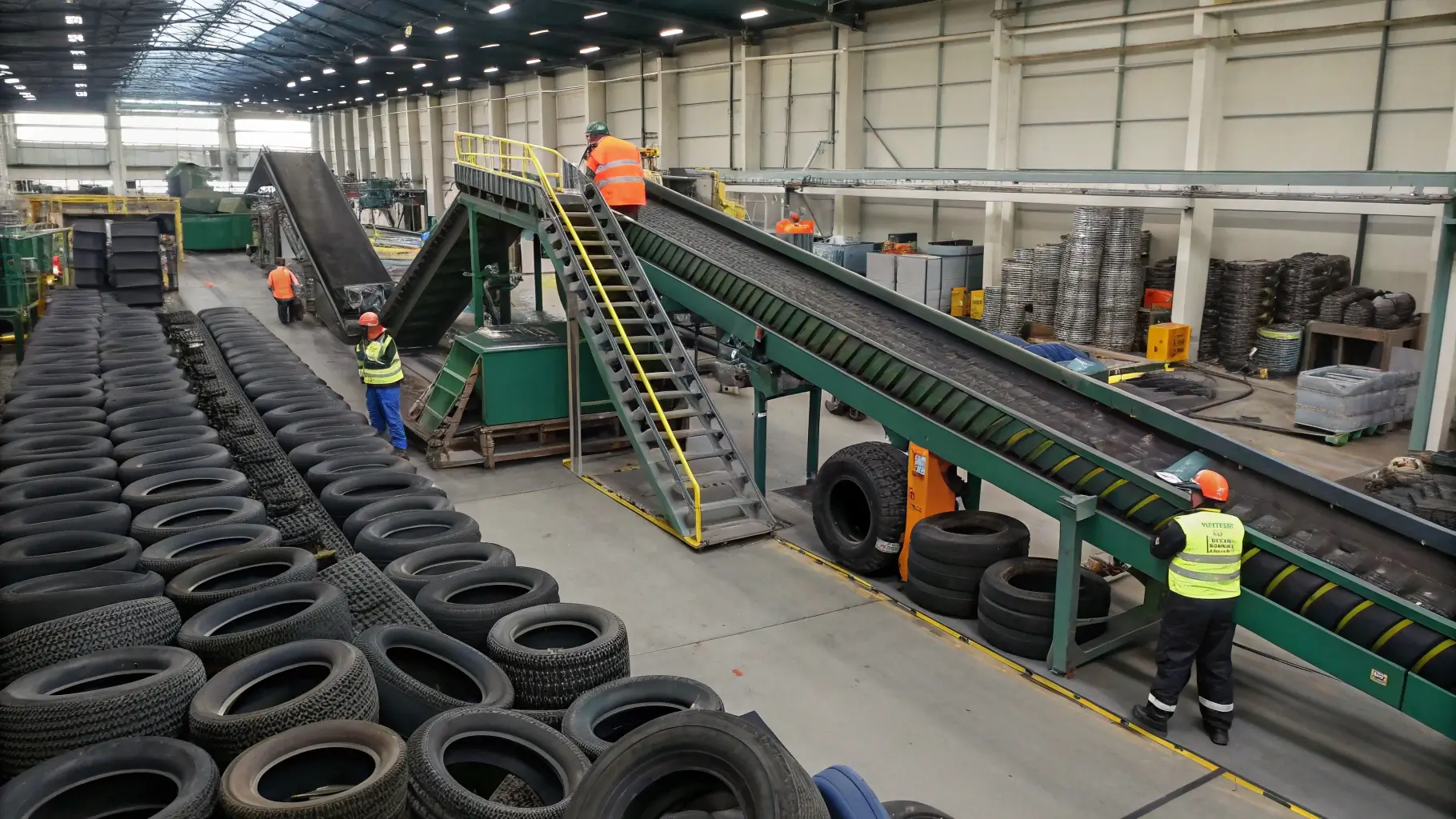
In my experience, buyers often ask this question, hoping that size equals quality. But the industry is more complex than that. You have massive operators who recycle tires, and then you have equipment manufacturers, like us at REPA, who build the plants for them. These are two different types of "big." An operator might process millions of tires, but they are not the ones who will sell you a production line1.
When you are looking for an equipment supplier, "biggest" is the wrong metric. You should be asking, "Who is the right partner for my business?" A smaller, more specialized manufacturer might offer better technology for your specific goal, whether it’s fine rubber powder or high-quality separated steel. They are often more flexible and dedicated to your success.
Key Factors Beyond Size
Instead of searching for the biggest name, evaluate potential partners on criteria that actually impact your return on investment.
| Evaluation Factor | Why It’s More Important Than Size |
|---|---|
| Technology & Specialization | Does their equipment produce the exact end-product you need (e.g., 80-mesh powder, clean steel)? A specialist will outperform a generalist. |
| Proven Track Record | Ask for case studies and references in countries with similar regulations and market conditions to yours. A global footprint shows adaptability. |
| After-Sales Support | Will they provide installation supervision, operator training, and have a clear warranty policy? Downtime costs more than a slightly higher initial price. |
| Transparency | A good partner is open about their supply chain, the metallurgy of their blades, and expected maintenance costs. Hidden costs can destroy your profitability. |
Your goal is to find a company that sees your project’s success as their own. That kind of partnership is far more valuable than just buying from the "biggest" name on a list.
How does China recycle waste?
China’s recycling landscape seems vast and can be confusing from the outside. New policies change the market quickly, so you need to understand the system to find the opportunities.
China recycles waste through a government-driven system that promotes a circular economy. This involves strict regulations, landfill bans, and strong support for high-tech industries that turn waste like old tires into valuable resources, such as rubber powder and steel.
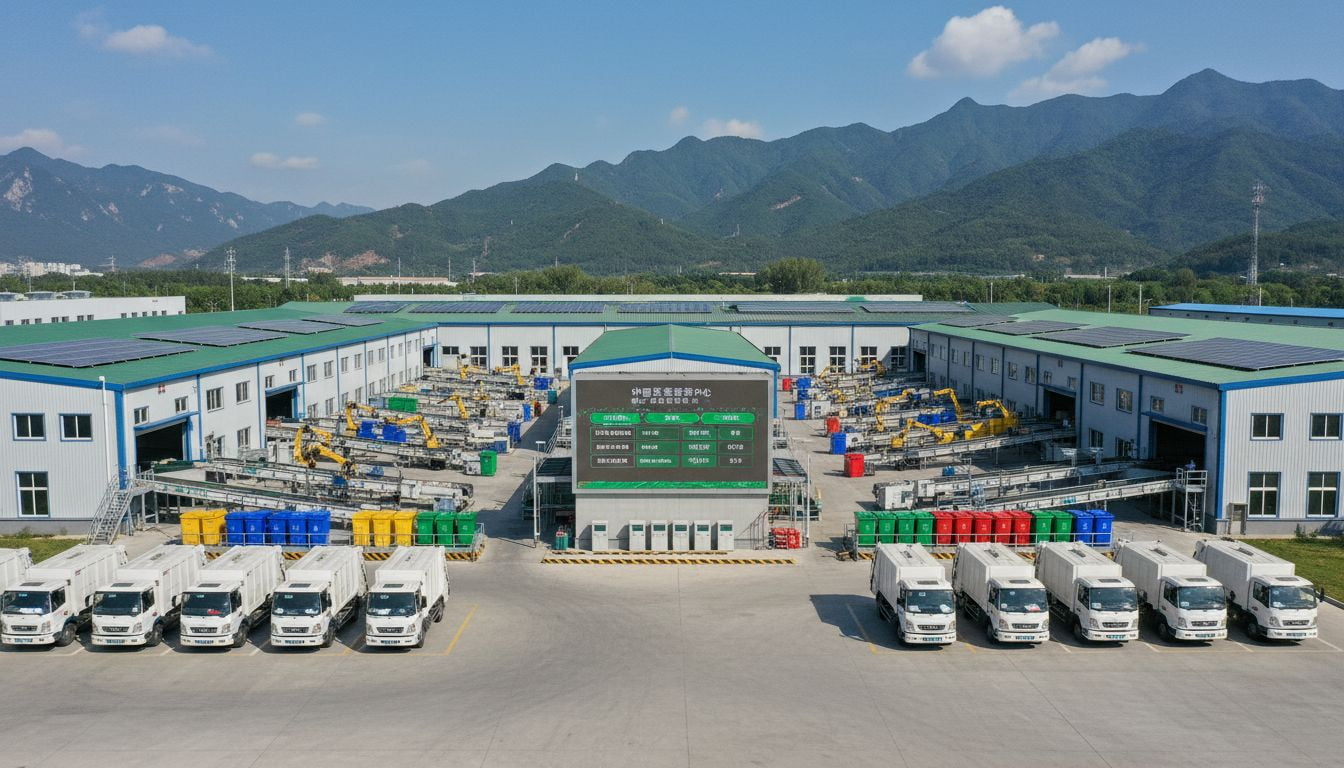
A few years ago, China made a huge shift. It went from being the world’s largest importer of recyclable materials to focusing intensely on its own domestic waste. Policies like the "National Sword" completely changed the game. For us in the tire recycling industry, this was a major catalyst. With landfills for tires being restricted and regulations tightening, the demand for efficient, clean recycling technology skyrocketed right here at home.
This domestic pressure has been a powerful driver for innovation. As manufacturers, we had to develop production line1s that were not only efficient but also environmentally sound, producing almost zero secondary pollution. Our systems must achieve nearly 100% separation of rubber, steel, and fiber because the domestic market for these raw materials is incredibly competitive.
What This Means for You as a Buyer
This internal competition in China is a direct benefit to international buyers. You get access to technology that has been tested and refined in one of the world’s most demanding recycling markets.
- Advanced Technology: The government push for a "circular economy2" means we focus on high-value output. Our machines are designed to produce fine, pure rubber powder that can be used in high-grade applications like modified asphalt and new rubber products.
- Environmental Compliance: Our equipment is built to meet strict Chinese environmental standards for dust and noise control. This means it’s often already compliant with regulations in your own country.
- Proven Reliability: Because our machines run in demanding, high-volume facilities across China, they are built to last. We’ve worked out the weak points and optimized them for continuous operation.
So, when you source from a reputable Chinese manufacturer like REPA, you are not just buying a machine. You are buying technology that has been hardened and proven in a highly competitive and regulated environment.
How is tire recycling done?
You see mountains of old tires and know there’s value locked inside them. But turning them into profitable materials seems complex. You need a clear, step-by-step process.
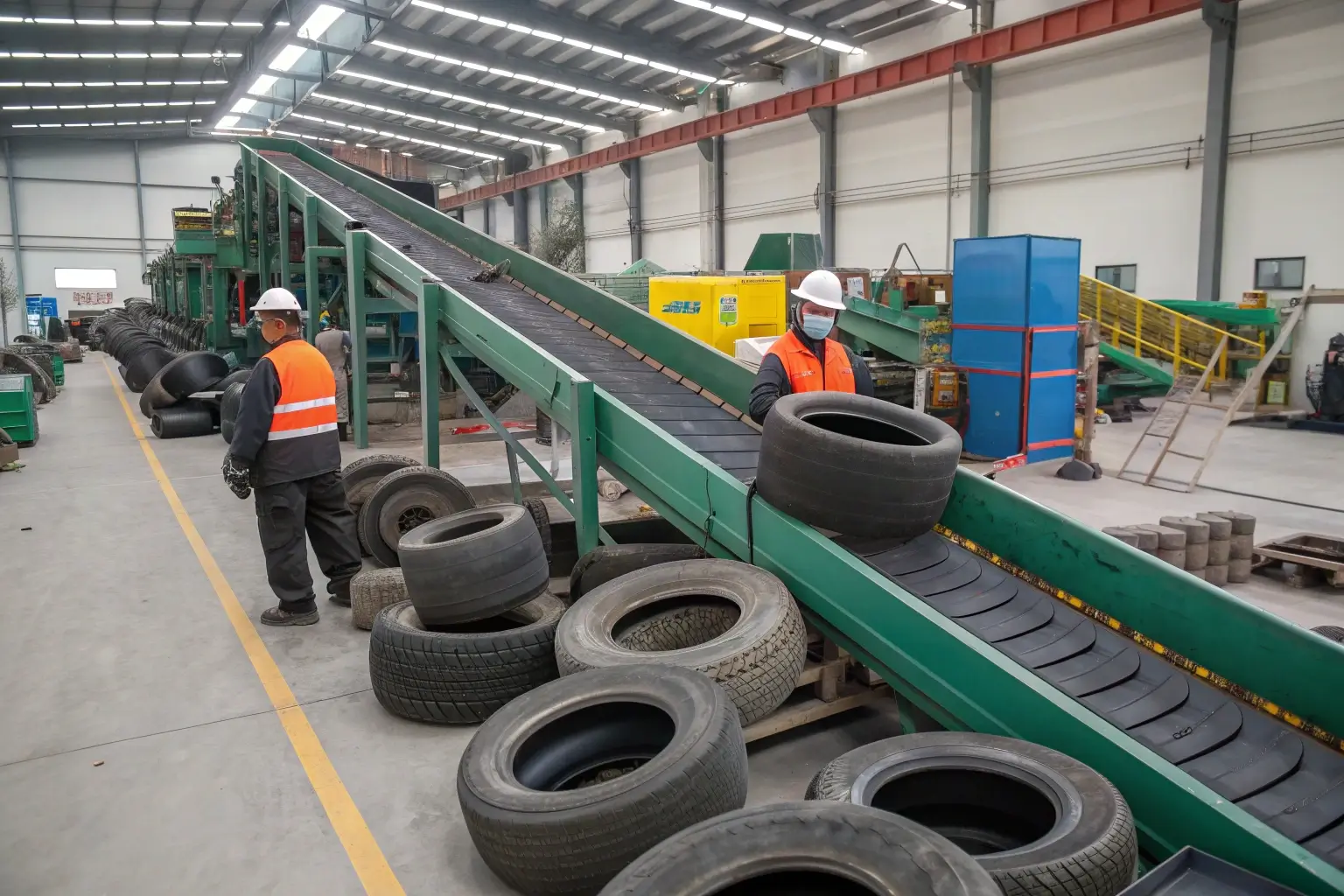
Tire recycling is done by mechanically shredding3 whole tires into smaller pieces at ambient temperature. The system then separates the rubber, steel, and fiber. The rubber is further granulated and milled into fine powder, while magnets and fiber separators ensure high purity.
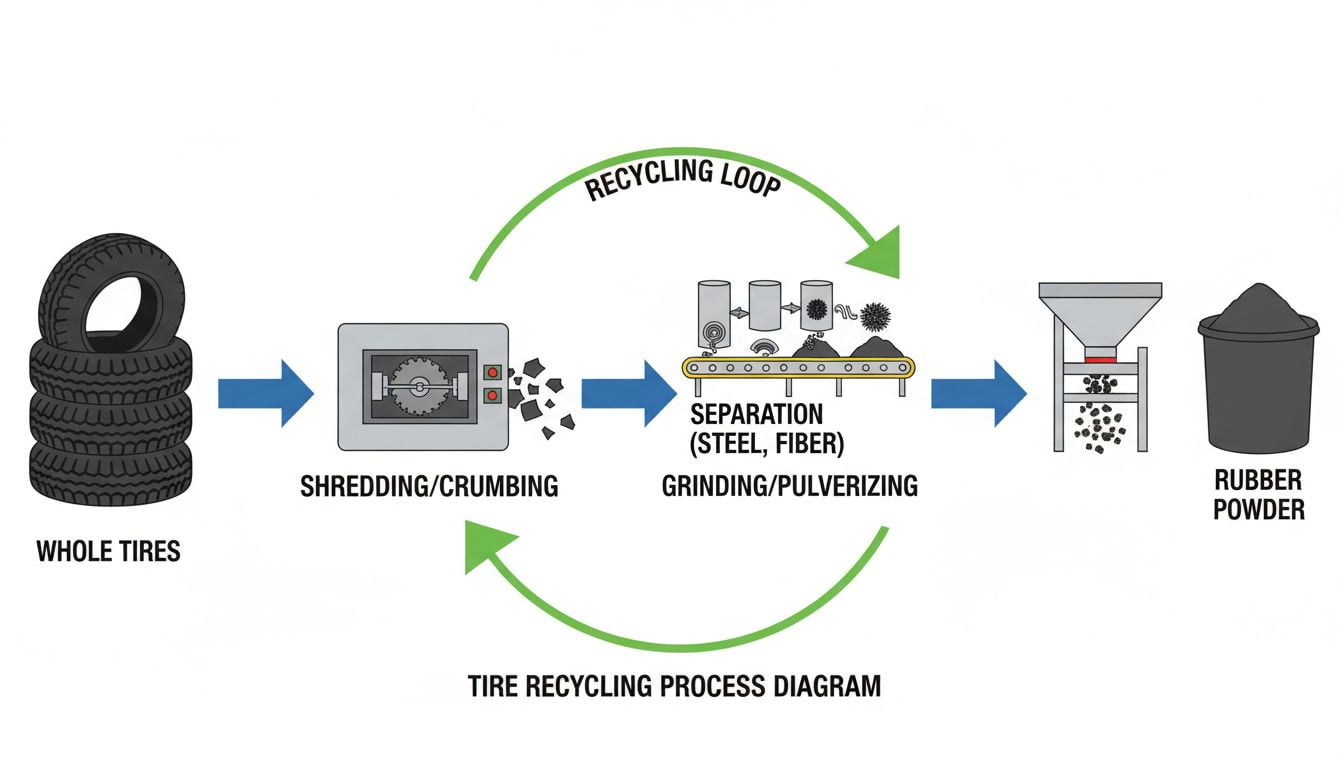
I’ve walked hundreds of clients through this process, and the best way to understand it is to break it down. At REPA, we’ve perfected a four-stage system that is clean, efficient, and ensures you get the highest value from every tire. It all happens at normal room temperature, which is safer and more energy-efficient than other methods.
The journey from a whole waste tire to valuable raw material is a mechanical one. It’s about liberation and separation. You are liberating the three components of the tire—rubber, steel, and textile fiber—and then separating them into clean, reusable streams. The quality of your final products, and therefore your profit, depends entirely on how well your equipment performs at each step.
The Four Core Stages of Mechanical Recycling
Let’s look at a typical production line1 in more detail.
- Primary Shredding:
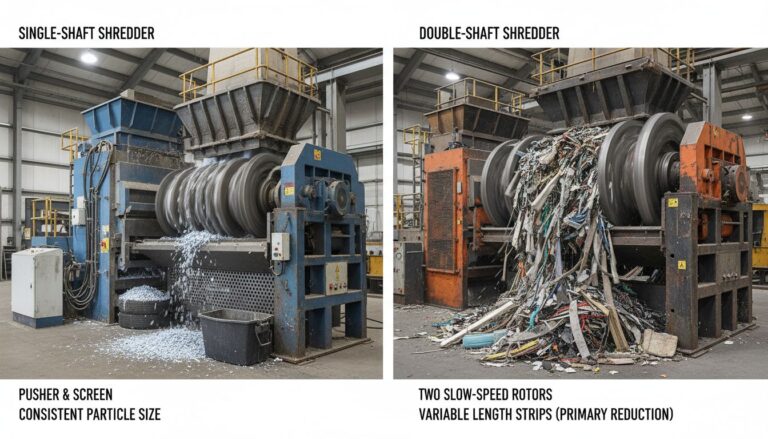
- It starts with a heavy-duty double-shaft shredder. Whole tires (after debeading, which pulls out the thick steel wire from the rim) are fed into it. The goal here is to rip the tires into large, palm-sized strips, about 50x100mm. This is the brute force stage.
- Secondary Crushing (Granulation):
- These strips then go into a granulator. This machine is where your operating costs are truly decided. Blade metallurgy and screen design drive your OPEX. You must insist on wear-life data based on the type of rubber and steel bead content you’ll be processing. I always tell my clients to keep a 12-month spares kit on site to avoid downtime. A cheap machine with soft blades will cost you a fortune in the long run.
- Separation and Purification:
- After granulation, the mix of rubber, steel, and fiber is transported over powerful magnets to pull out all the liberated steel. Then, a series of fiber separators and classifiers use air to suck away the lighter textile fluff. This stage is crucial for purity. A 99% pure product sells for much more than a 95% pure one.
- Fine Milling and Dust Control:
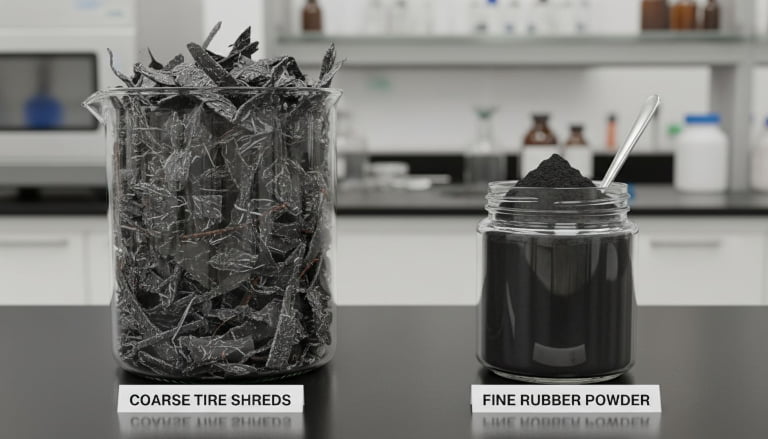
- The clean rubber granules are fed into a fine miller or pulverizer. This machine grinds the granules into fine rubber powder, from 30 to 100 mesh. At this stage, dust control is often under-scoped by suppliers trying to cut costs. You must specify an enclosure and correctly sized baghouse or cartridge filters for all hopper and transfer points. Doing so improves your crumb quality and makes your plant much safer for workers.
This process transforms a problematic waste product into three valuable commodities, ready for sale.
Conclusion
Sourcing tire recycling equipment from China is a strategic decision. Focus on transparent partners with proven technology to turn waste into real value and ensure your long-term project success.
-
This resource will give you a detailed overview of the components and workflow of a tire recycling production line. ↩ ↩ ↩
-
This link provides insights into the circular economy and its impact on recycling practices in China. ↩
-
Discover the process of mechanically shredding tires and its importance in recycling operations. ↩