What’s the Real Difference Between Single and Double Shaft Shredders?
Choosing a shredder feels like a huge gamble. You know it’s the heart of your recycling line, but picking the wrong one could cripple your throughput, ruin your particle size, and inflate your operating costs.
Single-shaft shredders use a pusher and screen to shear materials into consistent, defined particle sizes. Double-shaft shredders use two slow-speed, high-torque rotors to tear tough, mixed waste into strips with variable lengths, ideal for primary reduction.
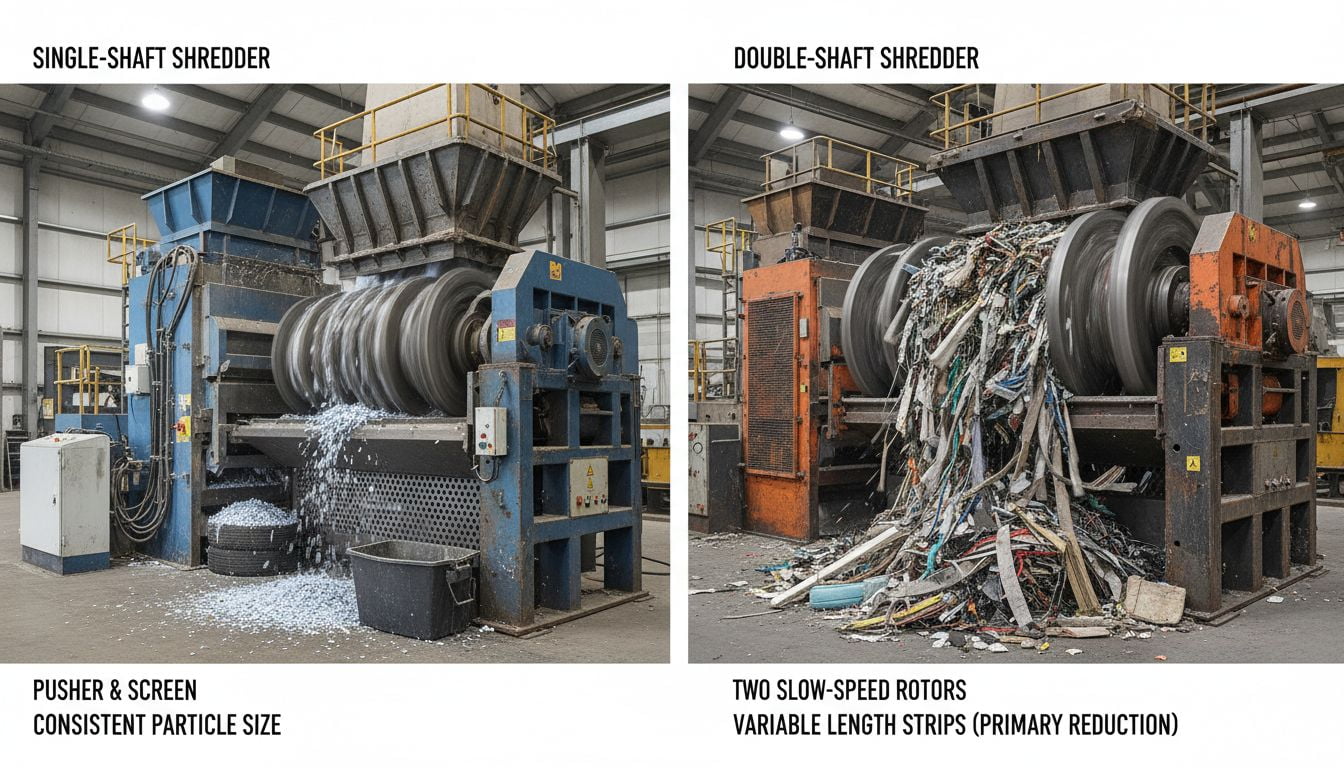
As a manufacturer of this equipment, I can tell you this choice defines your entire process. It’s not about which shredder is "better" but which tool is right for the job you need to do. A single-shaft shredder is like a finishing saw, delivering precision. A double-shaft shredder is like a sledgehammer, delivering brute force. Let’s dig into where each one shines, so you can build your line for profit, not problems.
Single vs Double Shaft Shredders: Which One Fits Your Material and Output Goals?
You see two different machines and wonder which is for you. One has a screen, the other has two rotors. You need a clear rule to guide your decision based on your specific needs.
Choose a single-shaft with a screen if you need uniform, spec-sized particles in one pass. Choose a double-shaft if you need robust primary reduction of tough, bulky, or mixed waste like tires, e-waste, or pallets.
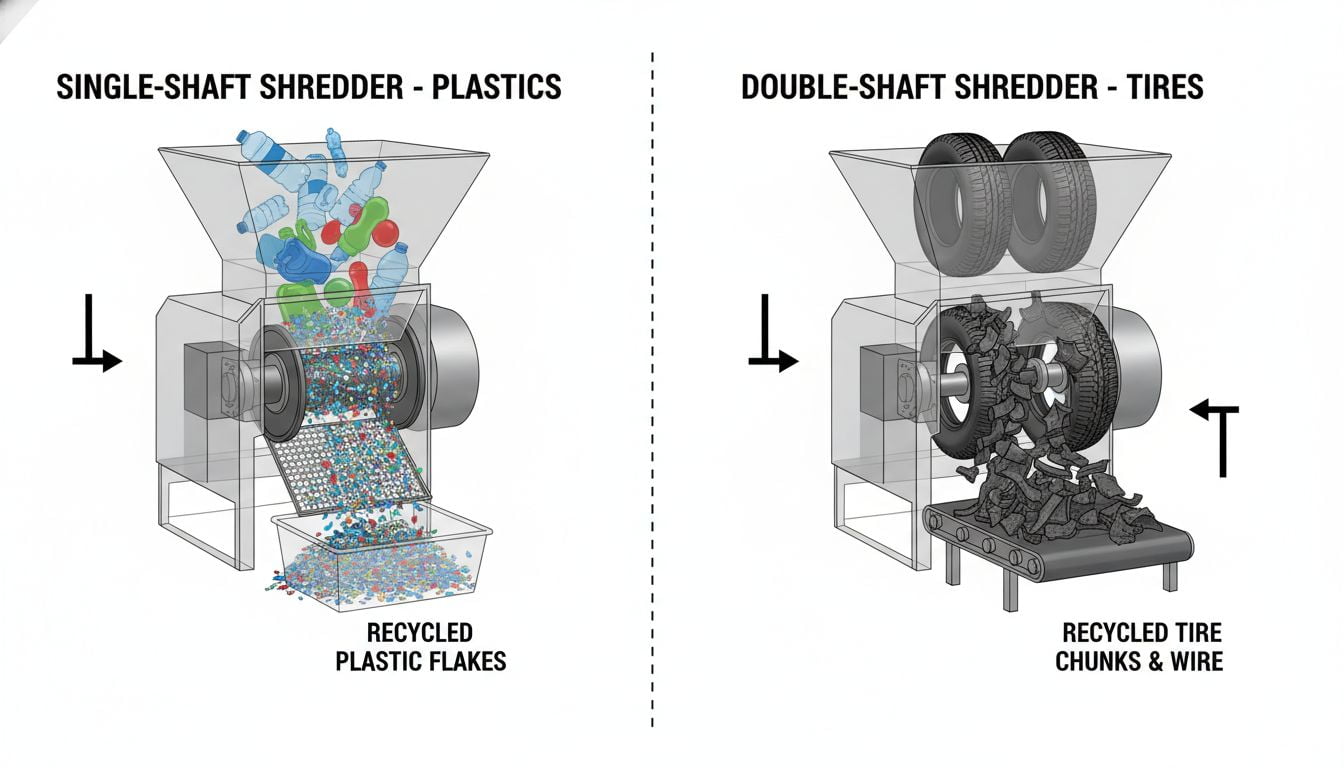
I always start by asking clients two questions: "What material are you processing?" and "What size do you need the output to be?"
The answers almost always point to the right machine.
If you’re processing clean plastics and need a consistent 50mm flake to feed a granulator, the single-shaft is your answer. Its ram pushes the material against the rotor, and nothing escapes until it fits through the screen.
But if you’re dealing with whole truck tires, mixed construction debris, or metal drums, a single-shaft would jam or suffer extreme damage.
That’s where the double-shaft excels — its two interlocking rotors grab bulky material and use immense torque to tear it apart.
For a new operator, here’s the simple rule:
- Need precision → Choose single-shaft
- Need power → Choose double-shaft
Which Shredder Is Best for Tire Recycling?
You’re in the tire business. You don’t need theory — you need the truth.
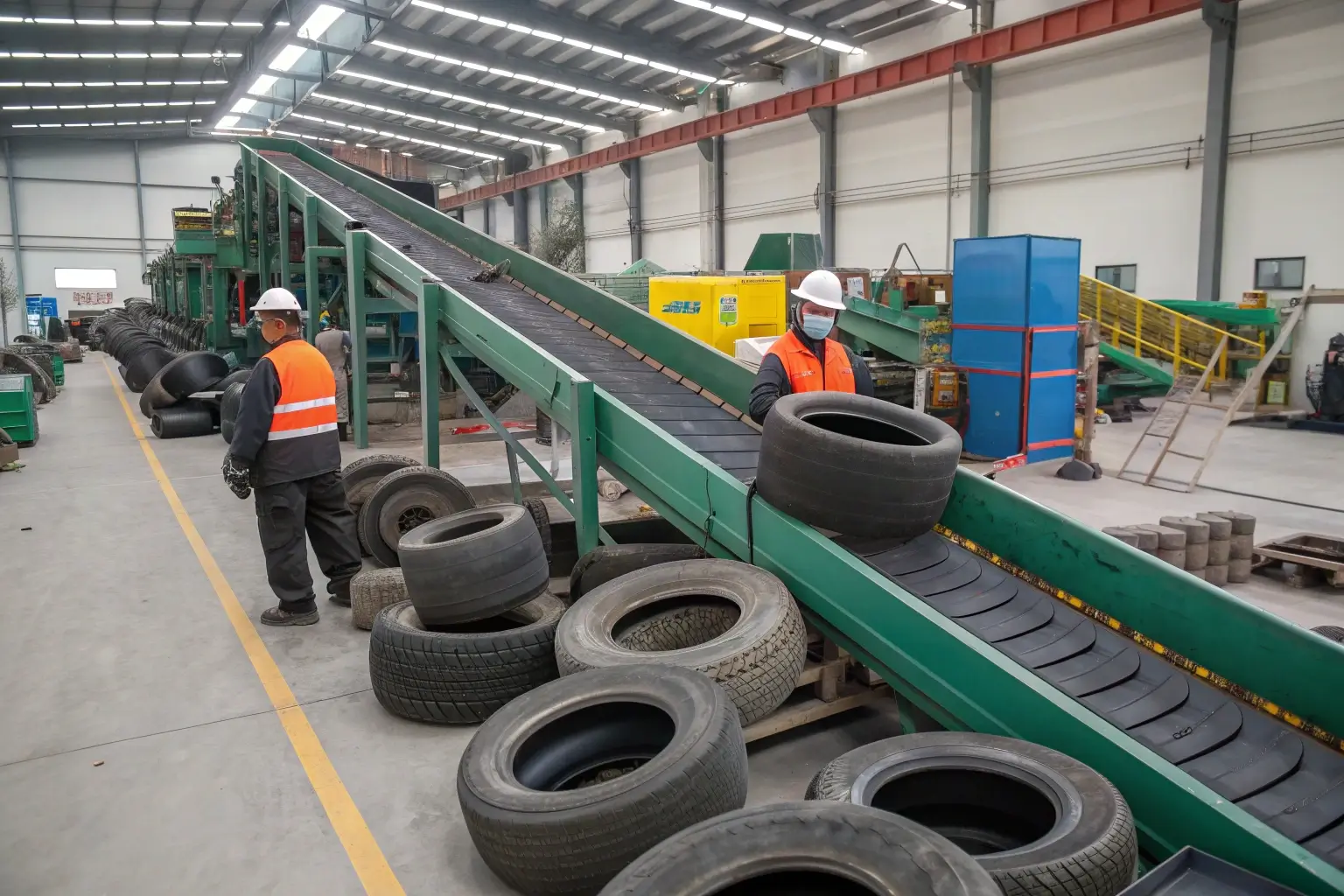
A double-shaft shredder is best for the primary shredding stage of tire recycling. Its high torque and low speed are perfect for tearing whole tires into large chips (50–150mm) and liberating steel wire.
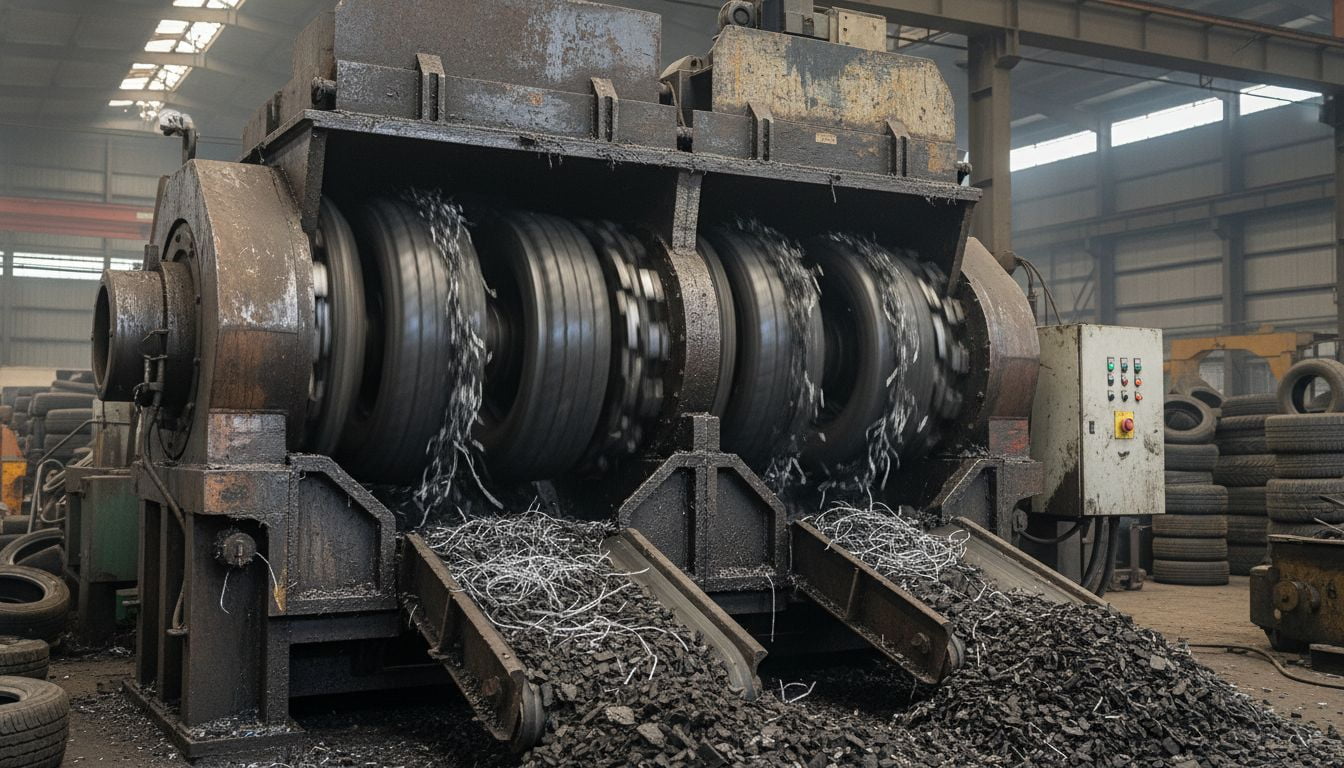
In our REPA tire recycling lines, the double-shaft shredder is always the first machine. Tires are engineered not to fail — thick rubber, steel belts, bead wire. Only a slow-speed, high-torque dual-rotor system can handle that brutality.
After primary shredding, the chips move to:
- Raspers — further size reduction
- Granulators — final particle sizing
- Steel separation systems — remove liberated wire
- Fiber extraction — purify rubber granules
Your line’s efficiency starts with the double-shaft shredder.
How Do Knives Affect Energy Use and Costs?
You focus on purchase price, but real cost lies in operation and maintenance.
Knives — your most important wear part — decide your power bill, throughput, downtime, and overall profitability.
Worn knives can increase energy consumption by 15–30%. High-quality reversible knives minimize downtime and reduce long-term cost per ton.
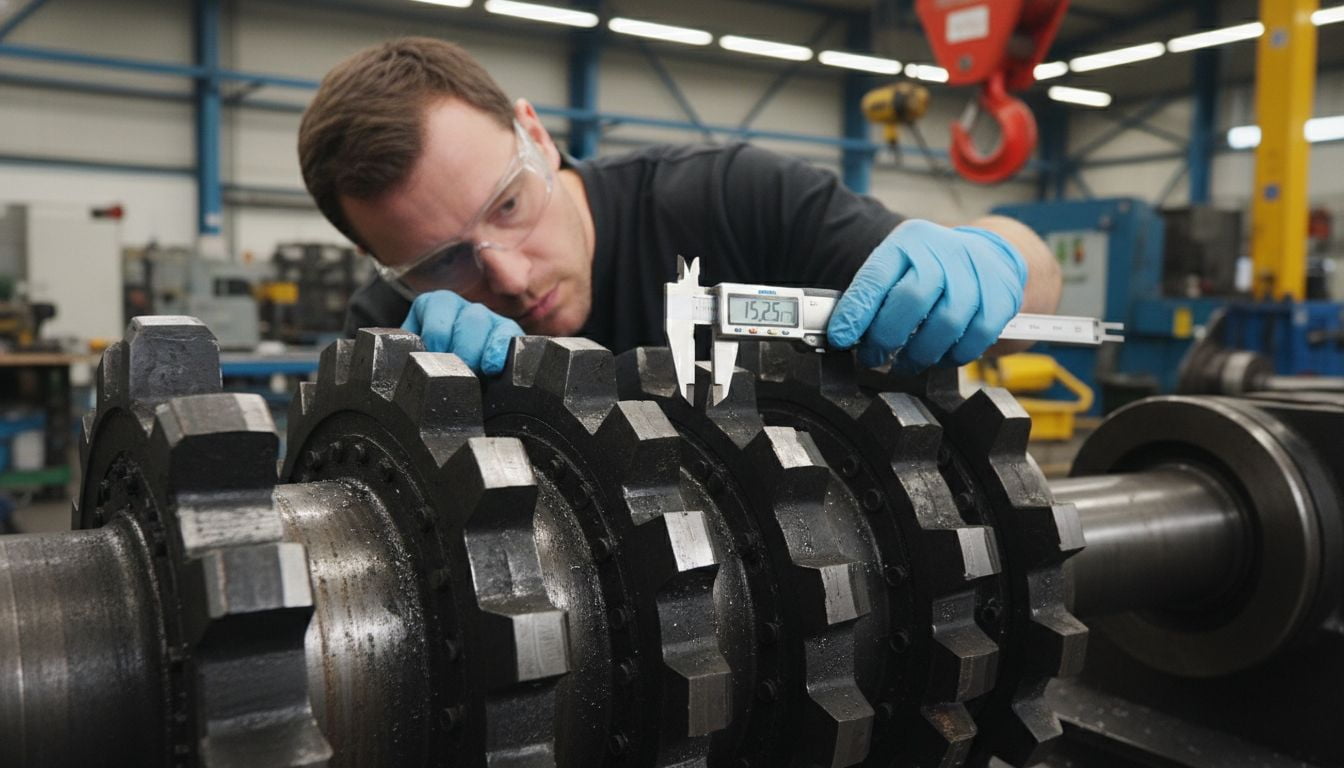
Sharp knives slice.
Dull knives smash — which costs you money.
When knives dull:
- Motors draw extra current
- Cutting efficiency drops
- Output size becomes inconsistent
- Heat and vibration increase
- Wear accelerates across all components
The best knife systems:
- Use alloy tool steel
- Are reversible (4–6 edges per knife)
- Allow bolt-on replacement
- Reduce downtime from days to hours
Knife maintenance isn’t optional — it’s a profit lever.
What Is a Single-Shaft Shredder?
You see the term everywhere, but what does it actually mean?
A single-shaft shredder uses one rotor with cutting blades, a hydraulic ram to push material into the rotor, and a screen that controls final particle size.
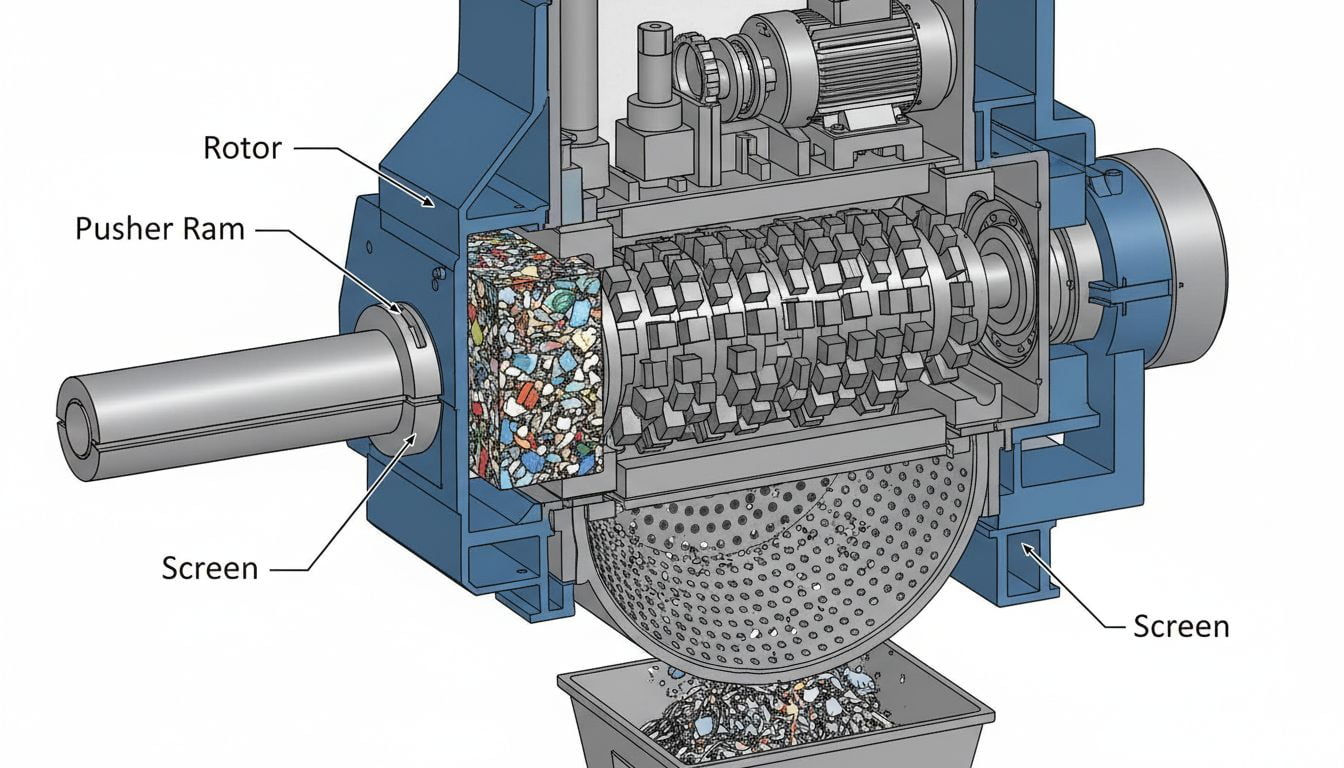
A single-shaft shredder is a controlled-output cutting system:
Key Components:
- Rotor — fitted with cutter blocks
- Hydraulic pusher ram — feeds material into the cutting chamber
- Screen — defines final particle size
- Counter-knife — supports clean shearing action
Best For:
- Plastics
- Wood
- Textiles
- Paper
- Clean, pre-sorted waste
- Precise, uniform output requirements
If your process requires controlled particle size, this is your machine.
Deep Technical Comparison: Single vs Double Shaft
🔧 Cutting Action
| Feature | Single Shaft | Double Shaft |
|---|---|---|
| Cutting style | Shearing + controlled screening | Tearing + shearing |
| Precision | High | Medium |
| Best for consistent output | ✔️ | ❌ |
⚡ Energy Consumption
- Single-shaft: Higher, due to ram + screen resistance
- Double-shaft: Lower, slow-speed, high-torque, ideal for bulky feedstock
🧱 Material Handling
- Single-shaft: requires cleaner material
- Double-shaft: handles dirty, mixed, bulky waste easily
🛠️ Maintenance
- Single-shaft: knives wear faster
- Double-shaft: knives last longer but require torque-resistant steel
When to Use Both Shredders in One Line?
For many recycling applications, the most cost-effective system combines both types.
Typical setup:
- Double-shaft shredder → primary tearing
- Single-shaft shredder (or granulator) → precise sizing
- Screening + separation systems → final purification
This combination is essential for:
- Tires
- C&D waste
- Aluminum scrap
- E-waste
- RDF/SRF fuel lines
If you want both power and precision, you need both machines.
Common Mistakes People Make When Choosing a Shredder
❌ 1. Buying based on motor size
More kW doesn’t mean more productivity — torque and knife design matter more.
❌ 2. Ignoring material contamination
Metal, rocks, and debris destroy single-shaft knives.
❌ 3. Choosing without a sample test
A 20-minute test can save 20 years of trouble.
❌ 4. Asking for small output size using only a double-shaft
You’ll never get 20mm rubber granules directly from a dual-rotor shredder.
❌ 5. Underestimating maintenance
Your shredder is a profit machine only if your knives are sharp.
FAQ: Quick Answers for First-Time Buyers
1. Can a single-shaft shredder process tires?
No. It will jam or break. Always use a double-shaft first.
2. How long do shredder knives last?
Depends on material, but reversible knife systems significantly extend lifespan.
3. Do I always need a screen?
Only single-shaft shredders use screens for particle control.
4. Can a double-shaft make uniform output?
Not by itself — you need downstream screening or a secondary shredder.
5. What’s the biggest cost factor?
Knife wear + electricity. Both depend on choosing the right machine.
Shredder Quiz
Conclusion
The choice is clear:
- Double-shaft = unbeatable for tough, bulky, contaminated waste
- Single-shaft = unbeatable for precise, controlled particle size
Matching the shredder to your material isn’t just a technical decision — it’s the difference between a recycling line that struggles and one that prints profit.
If you choose the right machine now, your entire operation will thank you later.