
Recycling Tire Rubber in Asphalt Pavements — Is Your Operation Actually Ready for This Market?
You’ve heard that rubber powder can go into asphalt. Maybe a customer mentioned it, or you saw it in a trade publication. The opportunity sounds straightforward. But when you look at your current output and try to match it against what asphalt plants actually buy, the picture gets complicated fast. The good news: the market is real. The barrier is specific, and it’s fixable.
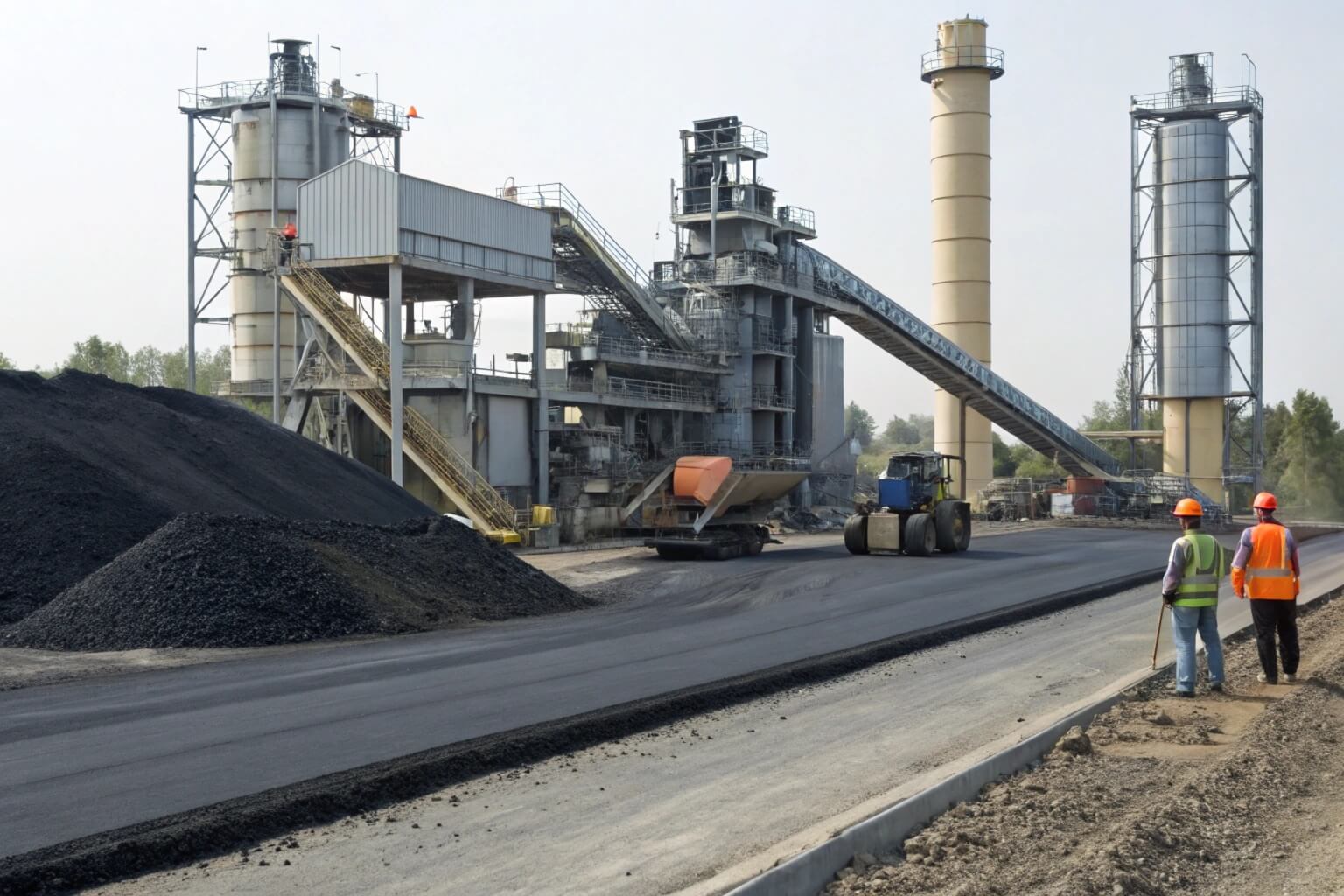
Recycling tire rubber in asphalt pavements is a commercially established application used in highway and airport construction1 across multiple markets. It is not experimental. But asphalt plants buy to a specification — primarily mesh size — and most tire recycling operations are not currently producing powder that meets that spec. The real question is whether your equipment can close that gap.
Before we go further, I want to be clear about who this article is for. If you’re already selling rubber powder into flooring, sports tracks, or commodity channels and you’re wondering whether asphalt is a channel worth pursuing — this is for you. The goal here is a realistic self-assessment, not a sales pitch.
Is Rubber-Modified Asphalt Actually a Real Market — or Still a Pilot Program?
One of the most common misconceptions I hear from tire recyclers is that rubber-modified asphalt is still in an "experimental phase." I understand where that belief comes from. Early adoption was slow, and the technology has been around longer than the commercial market suggests.
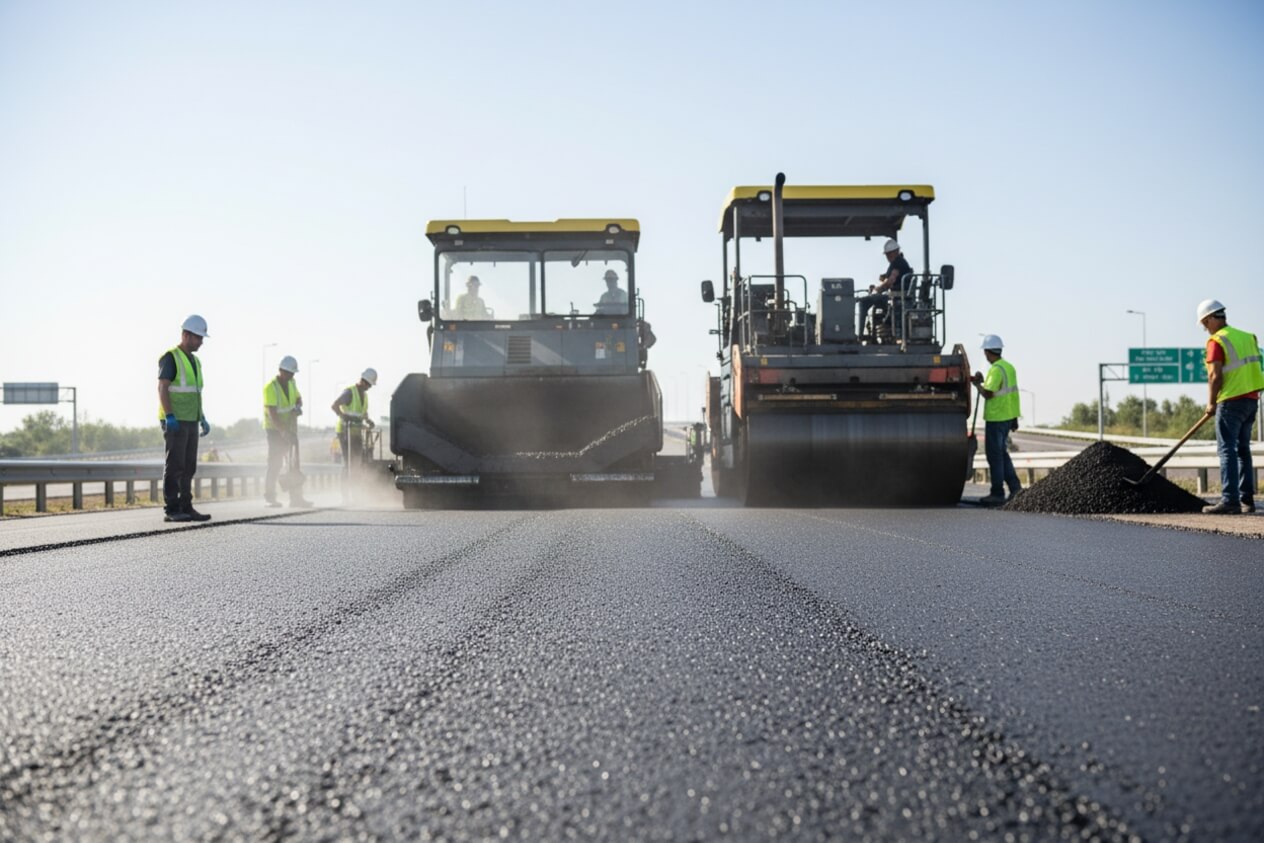
But that framing is outdated. Crumb rubber modifier (CRM) asphalt has been standard practice in specific markets for years. The U.S., China, Brazil, and several European countries have active programs — some with mandated use on certain highway classifications.2 This isn’t a niche trial. Procurement offices are issuing tenders for rubber powder supply with defined technical specs.
Why the "Still Experimental" Myth Persists
The confusion usually comes from a few overlapping realities:
- Adoption is uneven by region. A recycler operating in a market where rubber-modified asphalt isn’t common yet may genuinely never have seen a local buyer. That doesn’t mean the technology is unproven — it means their local paving industry hasn’t caught up.
- There are multiple process types. Wet process, dry process, terminal blend, field blend — these distinctions make the application seem more complex and fragmented than a single, established market. More on this below.
- Asphalt plant engineers are conservative buyers. Even in markets where CRM asphalt is standard, procurement teams ask detailed questions about consistency, contamination, and certification. That rigor can feel like skepticism when it’s actually just a quality gate.
The bottom line: if you’re evaluating this channel and wondering whether demand actually exists, it does. The question is whether your operation can meet the intake requirements of buyers who have real purchasing programs in place.
One thing we’ve seen repeatedly in customer consultations: recyclers assume they’re already in the right ballpark because they produce some form of rubber powder. The discovery that their current mesh output doesn’t match what asphalt buyers specify is almost always a surprise.
What Do Asphalt Plants Actually Require — and Why Does Mesh Size Matter So Much?
Most tire recyclers who approach the asphalt channel for the first time focus on price and volume. Those conversations stall quickly once the asphalt plant’s QC team asks for a mesh specification sheet. Mesh size — the fineness of your rubber powder — is the primary technical gatekeeper for this market.
The reason mesh size matters comes down to how the rubber interacts with the asphalt binder. Coarser particles don’t blend the same way as finer ones. Each process type has a tolerance range, and going outside it affects the final pavement performance — which is why asphalt engineers don’t flex on this.

The Two Main Process Types and Their Mesh Requirements
Understanding which process your target buyer uses is the first question to answer before you even assess your own output.
Dry Process (CRM — Crumb Rubber Modifier)
In dry process applications, rubber crumb is added directly to the aggregate mix before or during blending with asphalt binder.3 The rubber partially replaces aggregate.
- Typical mesh range: 30–80 mesh (approximately 0.2–0.6 mm particle size)
- Particle shape and surface texture matter — angular particles from ambient grinding tend to perform better in dry process than rounded ones4
- Moisture content requirements are typically strict (often below 1–2%), as moisture affects blend adhesion5
Wet Process (Terminal Blend and Field Blend)
In wet process applications, rubber powder is blended into the liquid asphalt binder before it is combined with aggregate.6 This requires finer, more uniform particles so the rubber dissolves or disperses adequately into the binder.
- Terminal blend typically requires 40–80 mesh or finer
- Field blend specifications vary but generally require 30–80 mesh minimum, with finer powder preferred
- Uniformity is critical — a wide distribution of particle sizes (some coarse, some fine) causes inconsistency in the binder blend
| Process Type | Typical Mesh Range | Key QC Concerns |
|---|---|---|
| Dry Process (CRM) | 30–80 mesh | Particle shape, moisture content, metal content |
| Wet Process – Field Blend | 30–80 mesh | Fineness consistency, fiber contamination |
| Wet Process – Terminal Blend | 40–80 mesh or finer | Uniformity, moisture, gradation curve |
The Coarse Powder Problem
Here’s the practical implication for most recyclers: basic shredding and granulating lines typically produce output in the 10–30 mesh range.7 That is too coarse for wet process asphalt and often sits at the low end of dry process tolerance — if it qualifies at all.
If your operation stops at granulation, your rubber powder probably does not meet asphalt plant intake specs without further processing. This isn’t a criticism of your equipment — it’s just a mismatch between what a general-purpose granulation line produces and what a specification-sensitive buyer requires.
The additional processing step — typically fine grinding to bring the particle distribution into the 40–80 mesh range consistently — is where the equipment readiness question becomes real.
How Do You Know If Your Current Operation Can Supply This Channel?
This is the section I’d encourage you to sit with. I’m not trying to sell you equipment upgrades. I’m trying to give you the same diagnostic conversation I’d have if you called us for a consultation.
There are four variables that asphalt plant QC teams check at intake. Walk through each one honestly against your current line’s output.

1. Mesh Range and Gradation Consistency
This is the non-negotiable. Not just "what mesh can your line produce" — but how consistently does it produce within that range across a full production run?
Asphalt buyers will often ask for a gradation curve, not just a headline mesh number. They want to see what percentage of your output falls within each sieve fraction. A line that nominally produces 40-mesh powder but with 20% coarser fractions in every batch will not pass intake.
Questions to ask yourself:
- What is the mesh range of my current output?
- Do I have gradation test data, or am I estimating?
- Does output consistency vary by feedstock (different tire types, wear levels)?
2. Metal and Fiber Contamination
Tire recycling lines separate steel wire and textile fiber from rubber — but "separation" is not the same as "elimination." Residual steel content in rubber powder is a rejection criterion for most asphalt buyers. Even small metallic fragments cause downstream problems in paving equipment.8
Fiber contamination is similarly disqualifying for wet process applications.9
- What is your current steel wire separation standard?
- Do you have magnetic separation in-line after grinding?
- Have you measured residual metal content in your final powder output?
3. Moisture Content
Rubber powder going into asphalt needs to be dry. High moisture content affects how rubber interacts with the binder and can cause quality issues in the finished pavement. Most buyers specify a moisture content ceiling — commonly under 1–2%.
- Does your process include a drying stage?
- Have you measured moisture content in your output, particularly during humid seasons?
4. Particle Shape
This matters more for dry process applications than wet. Ambient-temperature grinding (room temperature process) typically produces more angular, irregular particles — which is actually preferred in dry process CRM because the texture improves interlock with aggregate.
Cryogenic grinding produces smoother, rounder particles that perform differently.10 Know which process your line uses and whether the resulting particle shape matches the buyer’s preference.
What Does a Successful Transition Actually Look Like?
I want to anchor this with something concrete rather than theoretical. One of our customers — a tire recycling plant operator — successfully transitioned into supplying rubber powder to an asphalt manufacturer. That supply relationship is established and ongoing.
I’m not going to speculate on the economics they negotiated or the internal decisions they made along the way. What I can tell you is that the transition happened, and it required the operation to produce rubber powder that met the asphalt manufacturer’s intake specification consistently.
That’s the whole story, and it’s the most useful version of it. The transition is possible. It requires closing the gap between your current output and the spec sheet. Nothing in that process is exotic or proprietary — it’s a quality alignment problem, and it’s solvable.
Frequently Asked Questions
Can I sell rubber powder to asphalt plants if I only have a basic tire shredding line?
Probably not directly. Basic shredding lines produce rubber crumb that is typically too coarse for asphalt specifications — especially wet process. You would likely need a fine grinding stage added to your process to bring particle size into the 40–80 mesh range that most asphalt buyers require.
How do I find out which process type my local asphalt plant uses?
Ask them directly. Contact the technical procurement team, not the sales office. Ask whether they use dry or wet process rubber-modified asphalt, what their mesh specification is, and whether they have a technical intake checklist they can share. Most buyers with active purchasing programs will have this documentation.
Does rubber powder for asphalt need to be certified or tested before sale?
Requirements vary by market and by buyer. Some asphalt plants rely on their own incoming QC tests. Others require third-party test reports or compliance with specific national standards. Clarify this early in any sales conversation — it affects your overhead and your lead time.
Price differences exist, but they vary significantly by market, timing, and buyer. I would be cautious about anyone giving you a confident number here. The better framing: asphalt is a channel with consistent, specification-driven demand — which tends to mean more stable offtake relationships than commodity powder markets. That predictability may matter more than the price differential.
What’s the biggest mistake recyclers make when approaching asphalt buyers?
Showing up without a gradation curve. Asphalt plant QC teams need to see a particle size distribution, not just a headline mesh number. If you can’t provide that data from your own production output, the conversation ends early.
Conclusion
Recycling tire rubber in asphalt pavements is a legitimate, commercially active channel — not a future possibility, and not an experiment. But it is specification-sensitive in ways that catch most tire recyclers off guard. Mesh size is the gatekeeper. Process type — wet or dry — determines which mesh range you need to hit. And your current line’s output consistency, metal separation quality, and moisture control determine whether you’re actually ready to supply this market or not.
The opportunity is real. The entry bar is specific. The most useful thing you can do right now is pull your current gradation data and compare it honestly against the spec sheets of buyers in your region.
If you’re working through that assessment and want to talk through what it would take on the equipment side to close the gap, we’re easy to reach. That’s a conversation we’ve had many times — and it tends to go better when both sides bring their actual numbers to the table.
-
"Crumb Rubber Modifier – Asphalt – Pavement & Materials", https://www.fhwa.dot.gov/pavement/asphalt/crmbrubr.cfm. See Federal Highway Administration (FHWA) reports on the use of recycled tire rubber, which document its established commercial application in both highway and airport pavement projects. Evidence role: general_support; source type: government. Supports: The commercial establishment of rubber-modified asphalt in highway and airport infrastructure.. Scope note: Specific adoption rates vary significantly by state and municipality. ↩
-
"Where rubber meets the road", https://engineering.missouri.edu/2024/where-rubber-meets-the-road/. International transportation policy reviews highlight active crumb rubber modifier (CRM) programs and specific highway mandates in regions including the United States (e.g., California and Arizona), China, and Brazil. Evidence role: case_reference; source type: institution. Supports: The existence of active programs and mandates for rubber-modified asphalt in multiple countries.. ↩
-
"Crumb Rubber Modifiers (CRM) in Asphalt Pavements", https://www.fhwa.dot.gov/pavement/pubs/013380.pdf. Standard civil engineering definitions of the dry process specify that crumb rubber is introduced to the heated aggregate prior to or during the introduction of the liquid asphalt binder. Evidence role: definition; source type: education. Supports: The technical definition of the dry process in rubber-modified asphalt production.. ↩
-
"Evaluation of the Effect of Crumb Rubber Properties on the …", https://auetd.auburn.edu/bitstream/handle/10415/3484/Evaluation%20of%20the%20Effect%20of%20Crumb%20Rubber%20Properties%20on%20the%20Performance%20of%20Asphalt%20Binder.pdf?sequence=2&isAllowed=y. Research on pavement materials indicates that the irregular, angular morphology of ambient-ground rubber enhances mechanical interlock with aggregates in dry process applications compared to the smooth surfaces of cryogenically ground rubber. Evidence role: mechanism; source type: paper. Supports: The performance benefits of angular ambient-ground rubber particles in dry process asphalt.. ↩
-
"GRADATION REQUIREMENTS OF CRUMB RUBBER Sieve Size …", https://azmag.gov/portals/0/Documents/Specs_and_Details/2015Cases/Case_15-11_Section_717_Updated_8-27-15_Final.pdf. Studies on asphalt mixture durability demonstrate that crumb rubber moisture content exceeding 1% to 2% can lead to stripping and reduced adhesion between the modified binder and the aggregate matrix. Evidence role: mechanism; source type: paper. Supports: The strict moisture limits for crumb rubber and the mechanism by which moisture impairs asphalt adhesion.. ↩
-
"Scrap Tires – User Guideline – Asphalt Concrete (Wet Process)", https://www.fhwa.dot.gov/publications/research/infrastructure/structures/97148/st2.cfm. The Asphalt Institute defines the wet process as the method where crumb rubber modifier is blended with asphalt cement prior to incorporating the binder into the aggregate. Evidence role: definition; source type: institution. Supports: The technical definition of the wet process in rubber-modified asphalt.. ↩
-
"Crumb Rubber Modifier", https://www.intrans.iastate.edu/wp-content/uploads/sites/10/2019/01/PB93217297.pdf. Industry analyses of tire recycling processes indicate that standard ambient granulation stages predominantly yield crumb rubber in the 10 to 30 mesh range, necessitating secondary fine grinding for smaller gradations. Evidence role: statistic; source type: research. Supports: The typical particle size output of standard tire granulation equipment.. Scope note: Output sizes can vary based on screen sizes and specific equipment configurations. ↩
-
"HHE Report No. HETA-2001-0536-2864, Crumb-Rubber Modified …", https://www.cdc.gov/niosh/hhe/reports/pdfs/2001-0536-2864.pdf. Construction engineering literature notes that residual steel wire in crumb rubber can cause severe wear and blockages in asphalt plant pumps, valves, and the screeds of paving machines. Evidence role: mechanism; source type: paper. Supports: The mechanical disruption caused by residual steel wire in asphalt paving equipment.. ↩
-
"Scrap Tires – User Guideline – Asphalt Concrete (Wet Process)", https://www.fhwa.dot.gov/publications/research/infrastructure/structures/97148/st2.cfm. Research on modified binders demonstrates that residual textile fibers from tires absorb liquid asphalt and create agglomerations, which disrupt the uniformity and viscosity required in wet process blending. Evidence role: mechanism; source type: paper. Supports: The negative impact of textile fiber contamination on wet process asphalt blending.. ↩
-
"Resource Responsible Use of Recycled Tire Rubber in …", https://www.fhwa.dot.gov/pavement/asphalt/hif20043.pdf. Microscopic evaluations of crumb rubber reveal that cryogenic grinding fractures the rubber at glass-transition temperatures, resulting in particles with smooth, clean-cut surfaces and a more rounded morphology compared to ambient grinding. Evidence role: mechanism; source type: paper. Supports: The smooth and rounded morphology of cryogenically ground rubber particles.. ↩

